

In 2026, contract staffing stands out as your go-to solution for agile hiring. With workforce needs changing rapidly, adopting flexible hiring models helps you stay competitive and responsive. This article explores how contract staffing drives workforce management success and offers actionable strategies for recruitment professionals like you.

Why Contract Staffing is Essential for Agile Workforce Management
Contract staffing enables HR teams to pivot quickly in response to shifting business demands. You can scale your workforce up or down without long-term commitments, making it ideal in an uncertain economic climate. By leveraging temporary staffing, you improve operational flexibility and reduce hiring risks.
Research shows that 68% of companies plan to increase their use of contract workers by 2026 to enhance agility. This approach supports better workforce management by:
- Allowing swift deployment of skilled talent for short-term projects
- Providing cost control through variable staffing levels
- Bridging skill gaps during peak periods without permanent hiring

Key Benefits of Contract Staffing in Modern Recruitment Strategies
When integrating contract staffing into your recruitment strategy, you unlock numerous benefits. Beyond flexibility, this hiring solution enhances talent quality and speeds up recruitment processes. It also supports diversity and inclusion efforts by widening your talent pool.
- Faster time-to-hire: Contract roles fill faster with specialized recruiters and staffing agencies.
- Cost efficiency: Avoid long-term salary and benefits expenses for temporary roles.
- Access to niche skills: Tap into experts who bring unique capabilities for project success.
- Reduced turnover risk: Short-term contracts limit the impact of mismatched hires.

Implementing Contract Staffing: Step-by-Step Agile Hiring Framework
To maximize the benefits of contract staffing, follow this proven agile hiring framework:
- Assess Workforce Needs: Identify project timelines, skill gaps, and flexibility requirements.
- Engage with Staffing Partners: Collaborate with agencies specializing in temporary staffing to access their talent pools.
- Define Contract Roles Clearly: Communicate expectations and deliverables to ensure alignment.
- Streamline Onboarding: Implement efficient processes that get contractors productive quickly.
- Monitor Performance Regularly: Use KPIs to evaluate contribution and reassign resources agilely.
- Plan for Offboarding and Knowledge Transfer: Ensure smooth transitions post-contract.
Applying this structured approach helps you maintain workforce agility while controlling hiring costs and quality. For more insights on recruitment and staffing strategies, explore our related articles.
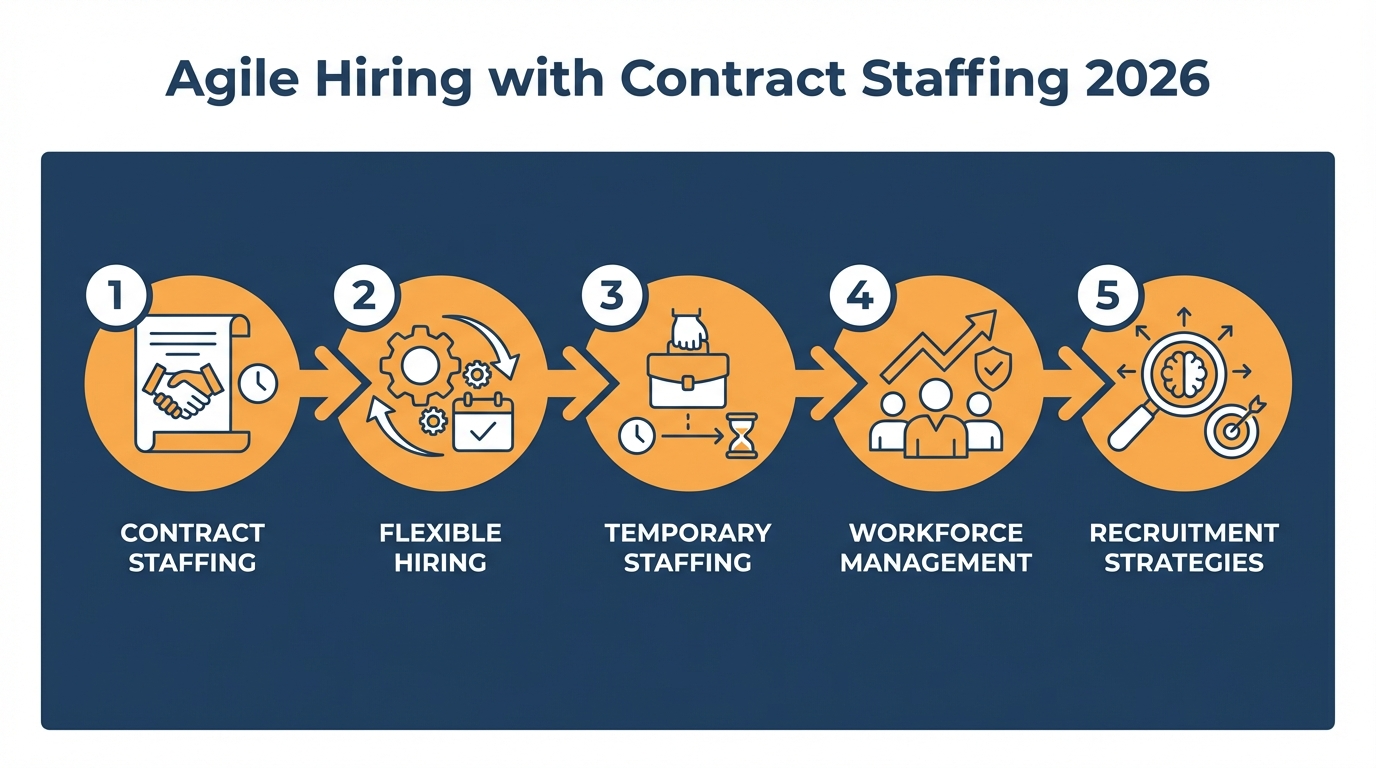
Conclusion: Why Contract Staffing is a Must-Have in 2026
In today’s fast-paced market, contract staffing gives you the agility to adapt workforce size and skills on demand. It supports your recruitment strategy by providing flexibility, reducing costs, and enhancing talent acquisition quality. By embracing contract staffing, you future-proof your hiring process against evolving business challenges.
Remember to continuously refine your approach and partnerships to extract maximum value. For a comprehensive overview of contract staffing terms and trends, you can also refer to this industry glossary.