

In 2026, businesses face rapidly changing market demands that require swift and flexible hiring strategies. Contract staffing has become essential for companies aiming to stay agile and competitive. By leveraging temporary and contract employees, organizations can quickly respond to project needs and scale their workforce efficiently.

Understanding the Fundamentals of Contract Staffing
Contract staffing involves hiring employees on a temporary basis for specific projects or time frames. This strategy allows companies to bring in specialized talent without committing to long-term contracts. It also reduces overhead costs associated with permanent hires, making it a financially prudent solution.
Many businesses now view contract employees as an integral part of their talent acquisition mix. They offer flexibility in workforce management and enable quick adaptation to fluctuating workloads or sudden skill shortages. Recruitment services specializing in contract staffing streamline this process by matching employers with the right candidates rapidly.

Why Agile Hiring Demands Contract Staffing
Agile hiring means responding promptly to changing business needs without sacrificing quality. Contract staffing is pivotal to this as it supports quick onboarding and deployment of talent. It reduces the time-to-hire significantly compared to traditional recruitment.
Data from workforce management reports show that companies employing contract staffing solutions improve project delivery times by up to 30%. This model also allows businesses to pilot new roles before deciding on permanent employment, which mitigates hiring risks effectively.
Flexible Hiring Strategies for 2026 Using Contract Staffing
Successful hiring in 2026 requires frameworks that support dynamic workforce deployment. Contract staffing fits perfectly within such frameworks by providing scalability and access to niche skills. Businesses can adopt hybrid staffing models—combining permanent and contract employees—to gain optimum flexibility.
Advanced recruitment consultants use data-driven approaches and AI-powered tools to forecast workforce needs accurately. This proactive method integrates contract staffing into long-term talent strategies, ensuring agile responses while maintaining workforce quality.
Key Benefits of Contract Staffing for Workforce Solutions
Contract staffing offers several advantages including cost control, reduced hiring risk, and enhanced workforce agility. It empowers HR teams to quickly fill gaps and meet project-specific demands without overextending resources. Additionally, it supports diversity and innovation by bringing in varied skillsets on a flexible basis.
For staffing agencies and recruitment consultants, contract employees represent a valuable pool that can be deployed strategically across client needs. Incorporating contract staffing into your hiring strategy ensures you stay competitive amid evolving market challenges in 2026 and beyond.
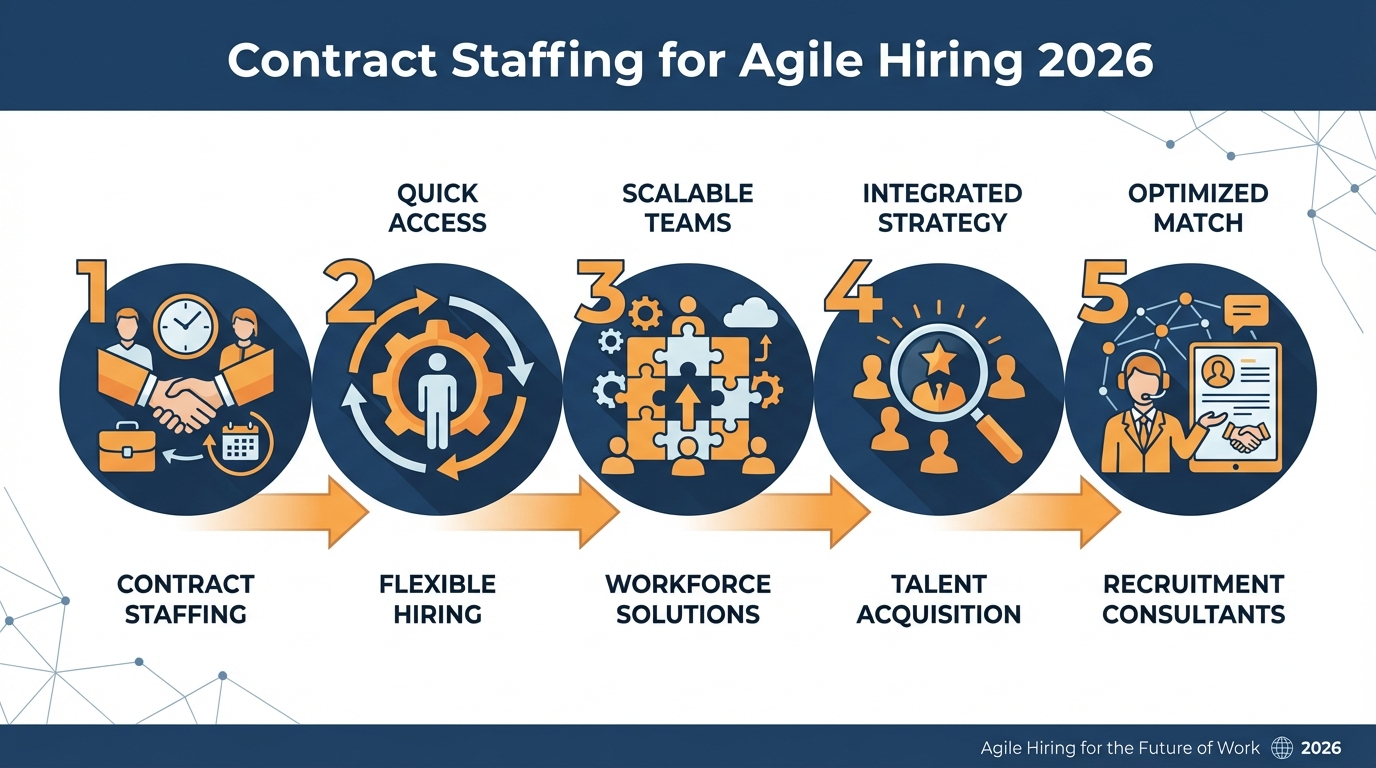
Actionable Steps to Implement Contract Staffing in 2026
- Analyze your workforce needs and identify roles suited for contract staffing.
- Partner with recruitment services specializing in flexible hiring solutions.
- Leverage data analytics to forecast demand and optimize contract employee deployment.
- Integrate contract staffing within your overall talent acquisition strategy for scalability.
- Continuously review contract staffing outcomes to improve hiring agility and workforce quality.
Embracing contract staffing is no longer optional—it’s a strategic imperative. For more insights on hiring trends and recruitment strategies, consider exploring our resources on recruitment services.