

In 2026, operational resilience stands as a crucial pillar supporting workforce stability for businesses navigating an unpredictable world. I’ll guide you through essential frameworks, recruitment strategies, and staffing solutions designed to enhance business continuity planning and ensure hiring success.

Understanding Operational Resilience and Its Frameworks
Operational resilience integrates the ability of organizations to absorb, adapt, and rapidly recover from disruptions while maintaining uninterrupted workforce performance. This stability in human capital is vital for sustaining business functions in 2026’s volatile environment.
The resilience framework is typically built on three pillars: absorptive capacity, adaptability, and transformability. Absorptive capacity allows firms to withstand shocks, adaptability ensures flexible workforce management, and transformability drives structural workforce changes to future-proof operations.

Recent surveys, such as the 2026 Gallup Workplace Engagement Report, indicate that organizations emphasizing resilience frameworks see 30% higher employee retention and 25% improved overall productivity. Notably, Deloitte’s Human Capital Trends underline how integrating resilience with recruitment strategies enhances operational agility.
Comparing Workforce Resilience Models and Business Continuity Plans
Diving deeper, competitor models vary in how they blend staffing solutions with resilience. Some prioritize predictive analytics for workforce risks, while others embed continuous cross-training and upskilling, both crucial for sustaining workforce stability. Businesses that employ a hybrid approach, combining technology with human-centered planning, achieve the best outcomes.
For example, adaptive workforce planning enables organizations to redistribute roles seamlessly during crises. Meanwhile, proactive recruitment processes keep talent pipelines full, reducing downtime caused by sudden vacancies. These strategies directly influence operational resilience by ensuring key roles never stay unfilled.

Recruitment Strategies and Staffing Solutions for 2026
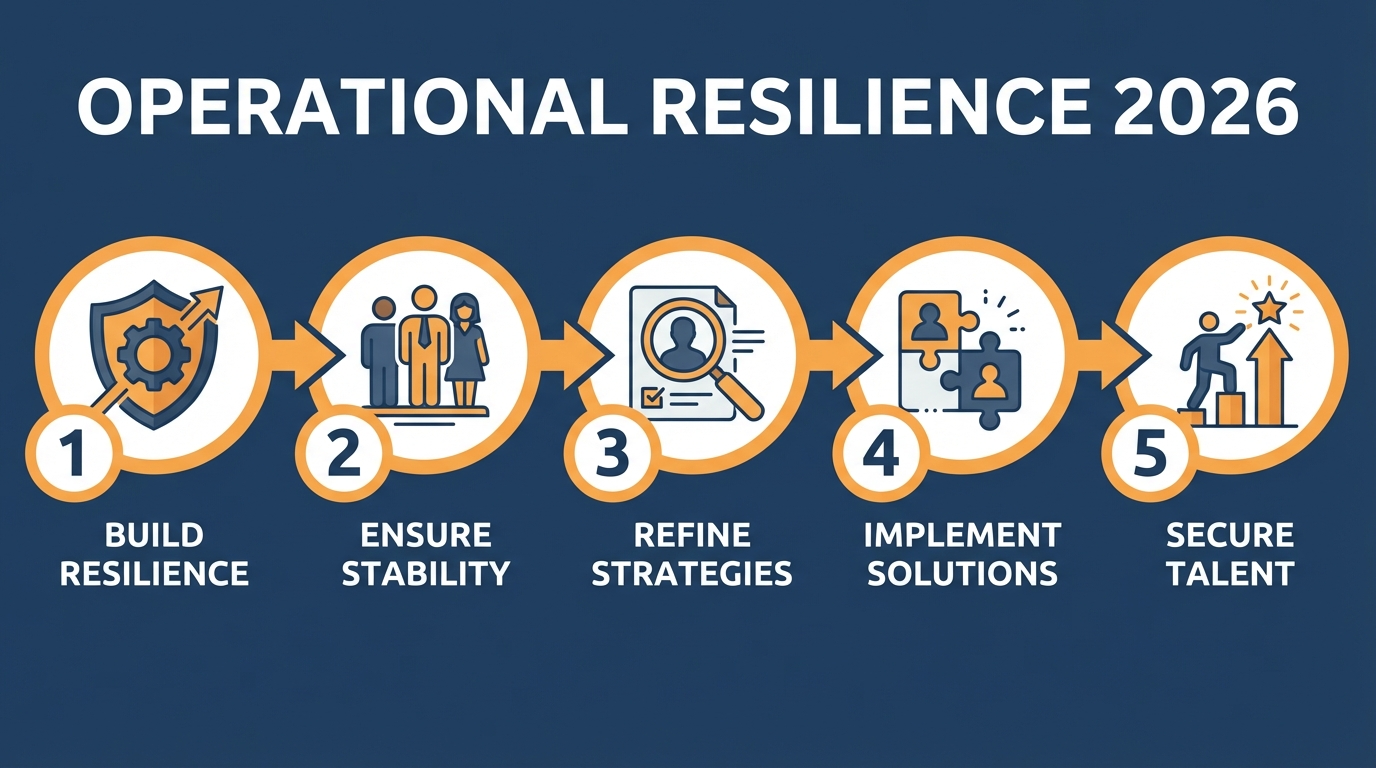
To translate operational resilience into actionable hiring success, I recommend focusing on flexible recruitment channels, including remote hiring and contract staffing. These methods expand your talent pool and quickly address fluctuations in workforce demand.
Also, incorporating diversity and inclusion initiatives builds a more resilient workforce by fostering a culture that can adapt creatively to challenges. Implementing technology-driven candidate screening accelerates selecting individuals who align with resilience values and competencies.
Additionally, integrating continuous learning programs tied to workforce optimization encourages employee growth and retention. These tactics reduce turnover risks and promote sustained operational performance.
Operational Resilience Best Practices for Workforce Stability
Ultimately, managing operational resilience requires a holistic approach covering talent acquisition, development, and retention. Embedding real-time workforce analytics enables HR leaders to anticipate disruptions and adapt quickly.
Partnering with expert recruitment firms can also enhance your business continuity planning by providing tailored staffing solutions aligned with resilience goals. For anyone looking to deepen their knowledge, resources such as operational resilience insights offer valuable perspectives.
If you want to explore related topics, check out our detailed guides on talent acquisition strategies and workforce optimization practices. They complement the frameworks discussed here and help build a resilient staffing model.