

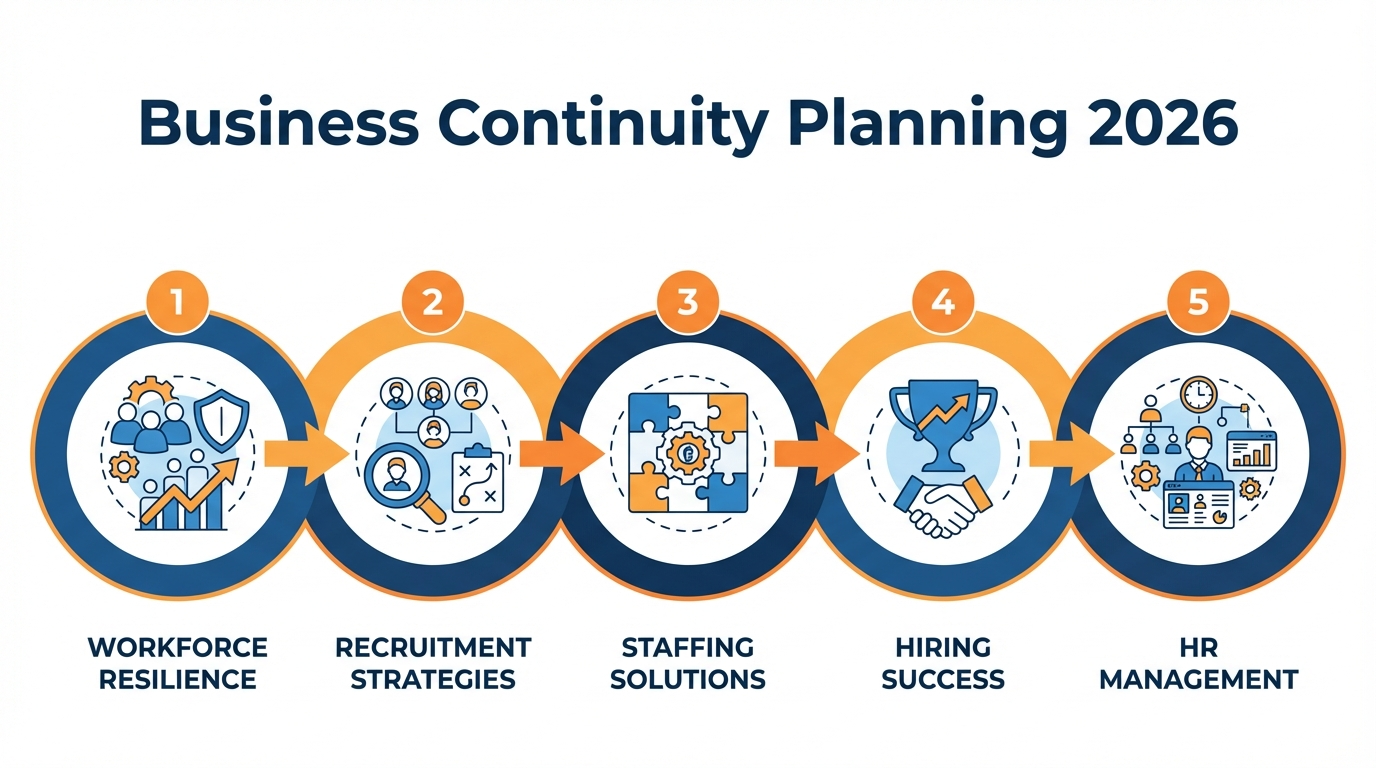
In today’s volatile business environment, business continuity planning is critical to maintain workforce resilience. I’ll guide you through essential strategies and practical steps to ensure your talent pool remains stable and agile in 2026.

Understanding Business Continuity Planning: Types and Key Components
Business continuity planning (BCP) includes preparing your workforce and operations for disruptions. It typically involves risk assessments, impact analysis, and recovery strategies.
The main types include crisis management plans, disaster recovery plans, and IT continuity plans, each addressing specific organizational threats. Key components are clearly defined roles, communication protocols, and resource allocation.
Regulatory requirements vary by industry but often mandate documented and tested plans to ensure operational stability. Incorporating staffing solutions in these plans means securing talent pipelines and cross-training employees to cover critical roles.
Implementing Business Continuity Planning: Step-by-Step Workforce Focus
Implementing business continuity planning requires a structured approach. Begin with a workforce risk assessment identifying critical roles and potential vulnerabilities in recruitment pipelines.
Next, develop contingency recruitment strategies such as establishing talent pools and leveraging staffing agencies for rapid deployment. Communication plans must keep employees informed during disruptions to reduce uncertainty.
Training and cross-functional skill development increase workforce flexibility. Regular plan testing with scenario simulations ensures readiness and highlights areas for improvement. This continuous cycle aligns well with emerging recruitment strategies focused on adaptability and resilience.
Strategic Recruitment Approaches for Workforce Resilience in 2026
In 2026, businesses must adopt sophisticated recruitment strategies aligned with continuity plans. Data-driven talent acquisition models help forecast workforce needs and reduce hiring risks.
Partnering with specialized recruitment consultants and agencies expands access to qualified candidates quickly during market fluctuations. Embracing recruitment technology, from AI screening tools to onboarding automation, improves hiring efficiency and candidate experience.
Finally, maintaining strong employer branding and employee engagement fosters retention, a key factor in workforce resilience. These best practices ensure your workforce is prepared for future challenges.
Conclusion: Strengthening Workforce Resilience Through Proactive Planning
Business continuity planning is no longer optional; it underpins successful recruitment and workforce management. By integrating robust staffing solutions and adaptable hiring strategies, organizations can withstand disruptions and maintain productivity.
Remember to regularly review and update your plans, incorporating the latest industry insights and regulatory changes. For more perspectives on workforce planning and recruitment best practices, check out our detailed guides.
For additional information on business continuity planning, you can visit this resource.