

In today’s rapidly changing business environment, temporary staffing emerges as a smart hiring solution in 2026. Companies demand flexible workforce strategies that adapt quickly to market needs, and temporary staffing offers a practical answer to this challenge.

Trends Shaping Temporary Staffing in 2026
The staffing industry in 2026 is defined by agility and innovation. More than 60% of companies now leverage temporary staffing to navigate economic uncertainties and project-based demands. Advanced technology, including AI and workforce analytics, helps recruiters predict hiring needs more accurately and match candidates faster.
Flexible workforce management frameworks integrate temporary staffing solutions with permanent hiring to optimize talent resources. This hybrid approach reduces turnover and enhances operational efficiency.
Key Benefits of Temporary Staffing for Workforce Management
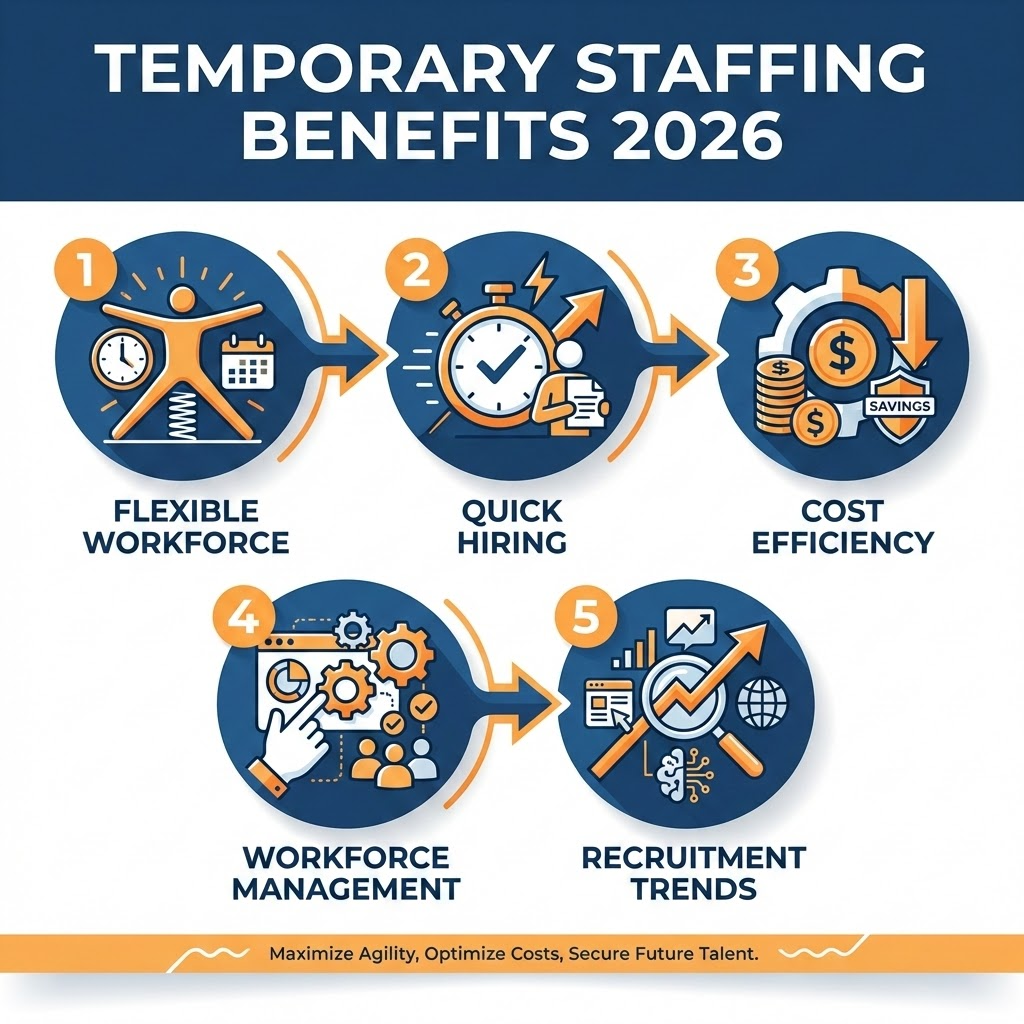
Temporary staffing delivers measurable benefits that make it indispensable for modern HR leaders. The most significant advantages include:
- Cost Savings: Lower recruitment and onboarding expenses compared to permanent hiring.
- Scalability: Easily scale workforce up or down in response to workload fluctuations.
- Speed: Faster candidate placement addresses urgent project needs.
- Risk Reduction: Minimize long-term employment risks during economic uncertainty.
- Access to Talent: Tap into specialized skills for short-term projects.
These benefits collectively support a more resilient and agile business model.
Strategic Hiring Approaches Integrating Temporary Staffing
Organizations that lead in recruitment adopt strategic approaches that blend temporary staffing with permanent recruitment. Data-driven decision-making plays a central role, using analytics to forecast hiring needs accurately.
An example is utilizing temporary staff for pilot programs or seasonal spikes, which informs future permanent recruitment decisions with real performance data. This approach minimizes hiring mistakes and improves workforce quality.
Optimizing Recruitment Success with Flexible Workforce Strategies
Adopting temporary staffing within a wider workforce strategy maximizes recruitment success. HR professionals must continuously evaluate market trends and align their staffing mix accordingly.
Tools like recruitment automation and workforce planning software strengthen these efforts, allowing proactive responses to changing business cycles. As a result, companies enjoy improved productivity and lower hiring costs.
For more insights on staffing solutions, check out our comprehensive recruitment and staffing guides to enhance your hiring strategies.
You can also explore external resources, such as the expert advice available on Reed’s temporary recruitment guide, to deepen your understanding of effective temporary staffing practices.