

Understanding operational resilience is essential for any organization aiming to maintain workforce stability in 2026. As businesses navigate uncertain environments, embedding resilience into recruitment and staffing strategies becomes a critical advantage. This guide explores the pillars of operational resilience and how they integrate with effective talent acquisition and workforce management practices to support continuous business operations.

What Is Operational Resilience and Why It Matters for Workforce Stability
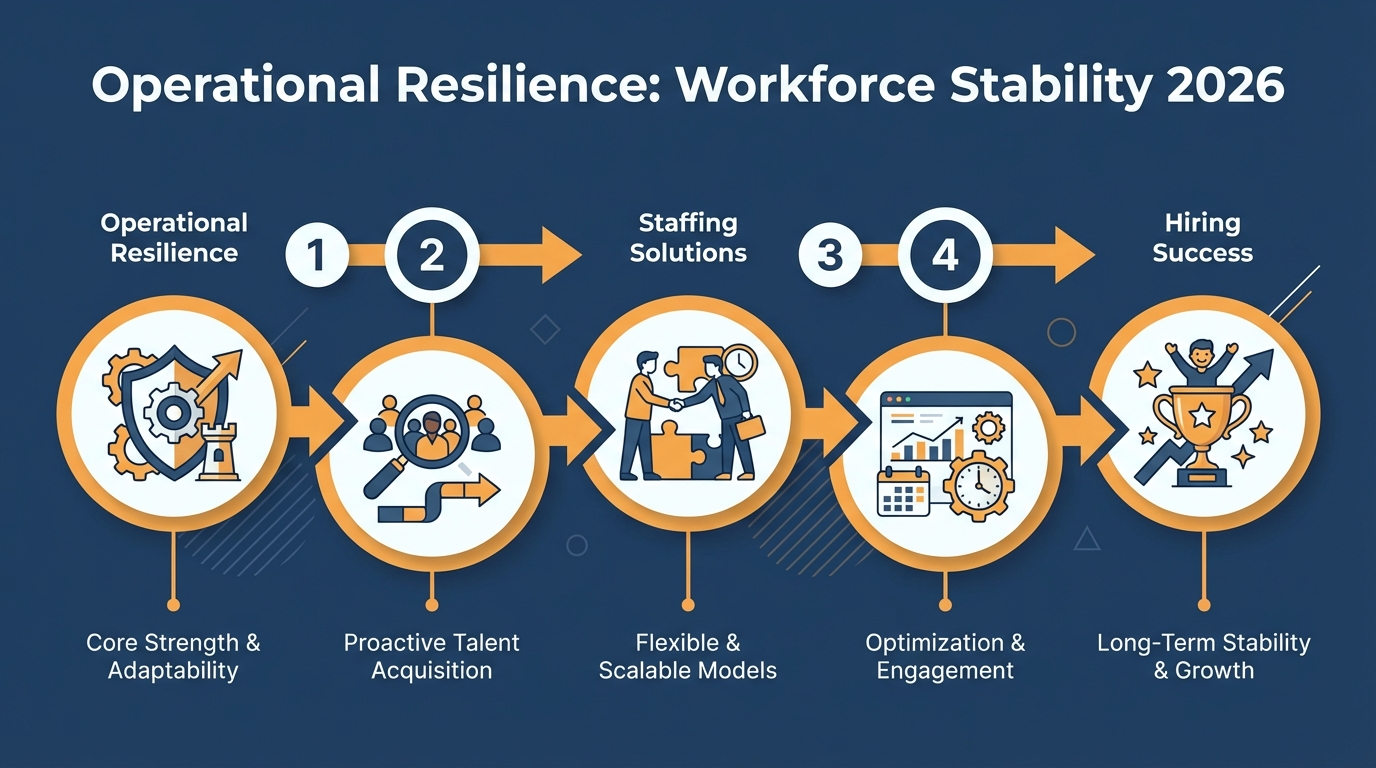
Operational resilience refers to an organization’s capacity to prevent, respond to, and recover from disruptions while maintaining critical functions. Its pillars include risk management, business continuity planning, and adaptive workforce strategies—all vital for retaining a stable workforce in volatile markets.
According to recent industry reports, companies prioritizing resilience see up to 30% less employee turnover during periods of disruption. This proves that workforce stability directly correlates with how resilient an organization’s operations are.
Establishing operational resilience involves:
- Identifying essential business services and their workforce dependencies
- Integrating risk assessments focused on human capital vulnerabilities
- Implementing contingency staffing and cross-training initiatives

Recruitment Strategies to Enhance Operational Resilience
Recruitment must evolve beyond filling vacancies to supporting a resilient workforce capable of adapting to change. Agile recruitment strategies help ensure continuity by aligning talent acquisition with resilience goals.
Key recruitment strategies include:
- Proactive talent pipelining: Developing pools of qualified candidates to reduce hiring lead times during disruptions.
- Competency-based hiring: Focusing on skills like adaptability, problem-solving, and flexibility that bolster resilience.
- Diverse sourcing channels: Incorporating a variety of recruitment platforms to minimize dependence on single sources.
- Inclusive onboarding processes: Ensuring new hires quickly integrate and contribute to business continuity plans.
Adopting applicant tracking systems integrated with workforce analytics enables hiring managers to identify trends and optimize recruitment aligned with resilience objectives.
Staffing Solutions and Workforce Management Techniques for Sustained Resilience
Operational resilience extends to how organizations manage existing talent during crises. Effective staffing solutions reduce disruption impact and maintain productivity.
Proven techniques include:
- Flexible workforce models: Utilizing contingent, gig, and remote work to scale up or down rapidly.
- Cross-training programs: Empowering employees with multiple skills to fill critical gaps seamlessly.
- Real-time workforce monitoring: Leveraging data tools to anticipate staffing shortages or surpluses.
- Employee wellness and communication: Addressing mental and physical health to maintain engagement and reduce absenteeism.
Integrating these approaches into a comprehensive business continuity plan strengthens operational resilience, ensuring the workforce remains robust and adaptive.

Implementing Operational Resilience Frameworks for 2026 and Beyond
Deploying an operational resilience framework tailored to your workforce involves continuous evaluation and iteration. Begin with a clear roadmap:
- Map critical business functions and workforce dependencies.
- Assess risks including talent shortages and cyber threats affecting recruitment platforms.
- Develop recruitment and staffing policies reflecting resilience pillars.
- Train HR personnel and hiring managers on new resilience-aligned processes.
- Measure outcomes through retention rates, hiring speed, and employee satisfaction surveys.
Following these steps promotes a culture of preparedness and agility, which is indispensable for thriving in complex business landscapes.
Final Thoughts: Operational Resilience as a Strategic Staffing Advantage
As I’ve seen in practice, organizations that embed operational resilience in their recruitment and staffing models gain a sustainable competitive edge. They not only minimize workforce disruptions but also build a proactive culture prepared for future challenges.
For a deeper dive into specialized recruitment and staffing techniques, you can explore our expert solutions tailored for operationally resilient workforces on Operational Resilience by Ofwat.