

Hiring top executives requires a precise and strategic approach, especially as competition heats up in 2026. The executive search process helps organizations identify elite leaders who align with their business goals and culture. As recruitment professionals, understanding the nuances of executive search enables us to deliver better workforce solutions and gain a competitive edge.

Understanding Types of Executive Search Firms
Executive search firms specialize in different engagement models tailored to client needs. Retained executive search firms work exclusively on high-level roles, offering deep industry expertise and dedicated resources. In contrast, contingency search firms operate on a success-fee basis, allowing engagement without upfront costs but with less personalized focus.
Hybrid models and boutique firms are gaining traction by blending the benefits of both retained and contingency services, offering tailored recruitment solutions for niche sectors. Knowing these distinctions helps recruitment professionals select the best approach depending on the organizational urgency and position level.

Key Skills and Fee Structures in Executive Search
Successful executive search consultants bring critical skills such as industry knowledge, networking prowess, and assessment expertise. They must balance confidentiality with transparency throughout the process. Understanding fee structures is equally important; retained searches typically charge 25-35% of the candidate’s first-year compensation.
Contingency fees can be lower but riskier for firms. Some firms offer flat fees or phased payments, especially for multinational searches. When considering an executive search firm, always analyze the value against cost and service quality to maximize recruitment ROI.
The Executive Search Process Timeline Explained
The executive search timeline usually spans 8 to 16 weeks, depending on role complexity and client requirements. It starts with detailed position analysis and candidate profiling, followed by intensive market mapping and discreet outreach.
Subsequent stages encompass in-depth interviews, assessment, client shortlisting, and final negotiations. Each phase demands precise coordination to ensure a smooth hiring experience. Knowing this timeline helps HR leaders set realistic expectations and resource planning.

Competitor Analysis of Top Executive Search Firms
Leading firms like Page Executive, Korn Ferry, and Spencer Stuart excel due to global reach and specialized consultant teams. They invest heavily in data analytics and proprietary assessments to improve candidate matching.
Smaller boutique firms differentiate themselves with personalized services and faster turnaround times. Understanding competitor strengths informs strategic decisions when partnering for executive recruitment or benchmarking your recruitment agency’s offerings.
Framework for a Successful Executive Search
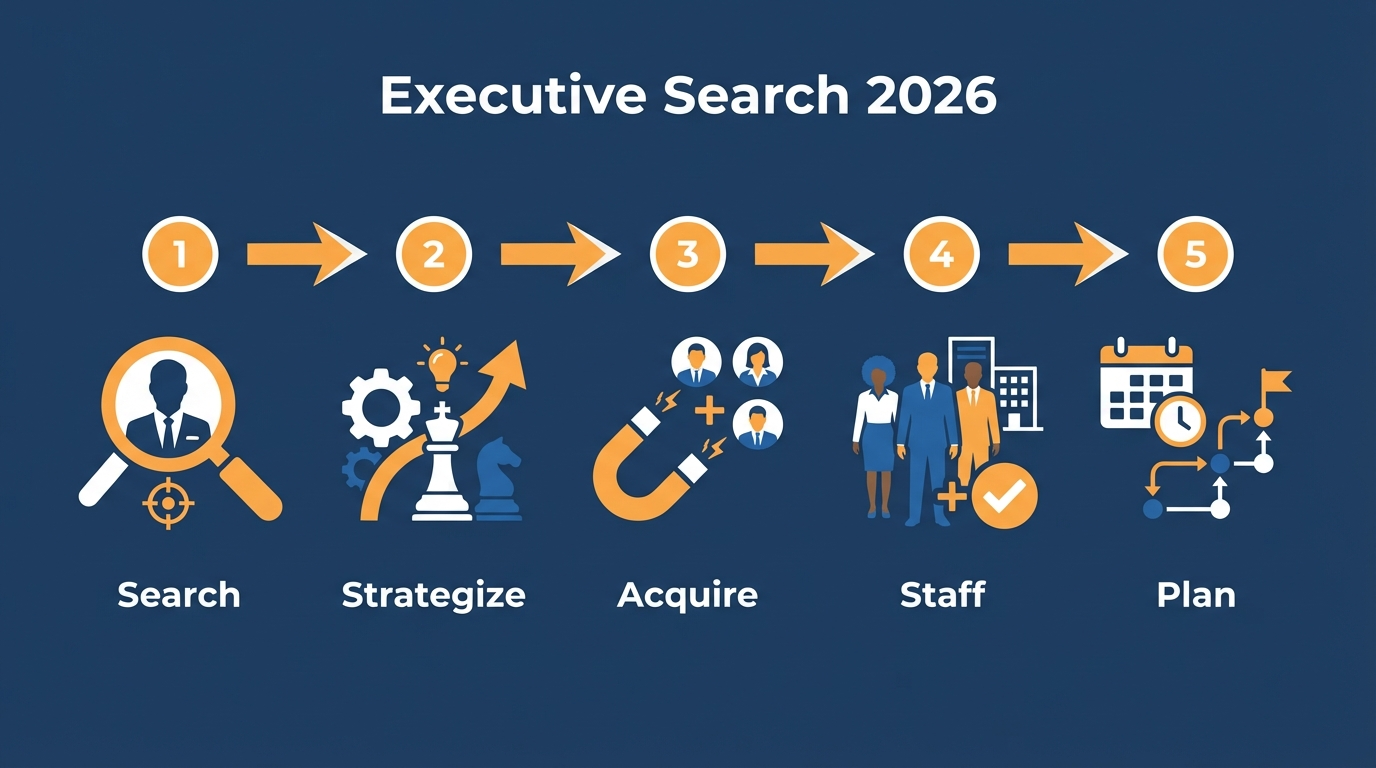
Follow a structured approach to maximise executive search success: commence with a thorough needs analysis, define the ideal candidate profile, and select the right search firm carefully. Leverage technology platforms for market insights and candidate sourcing. Conduct multi-stage assessments to evaluate skills, experience, and cultural fit.
Maintain transparent communication between all stakeholders and provide regular progress updates. Post-placement follow-up enhances retention and solidifies client relationships. This framework streamlines complex executive hiring and boosts quality outcomes.
Implementing robust executive search strategies ensures organizations secure leaders capable of driving growth amid evolving market demands. For more detailed insights, explore our comprehensive recruitment and staffing services that support your hiring objectives.